• If you love The Lion King, you can’t forget this scene. It’s the moment Simba realizes his father is gone — and in an instant, the illusion of safety collapses. He understands, maybe for the first time, that life will never be the same.

    The truth is, we all have a moment like that — a Simba moment. When the guardrails fall, life can feel harsh, disorienting, even unfathomable. Most of us are not ready for such changes in life, but they will come eventually. The issue is not that we don’t recognize that change happens, but we never expect it to happen to us at the time it does. It’s as if we are immune to the shifts in life everyone encounters at some point. Below I explain why moments like these shell shock us and how being unprepared can shift us in ways that change our destiny.

    The illusion of stability

    For most of us, we wake up every day assuming tomorrow will resemble the day before; that life will hold its shape as it always has. But with every passing day, the odds increase that something will shift dramatically — a loss, a birth, a betrayal, a sudden change. The stability we depended on will eventually disappear, guaranteed.

    I call this the continuity paradox. The more stable life appears, the more deeply we believe it will remain that way, even though it never does. Stability creates the illusion of permanence. And paradoxically, the more secure we feel, the less prepared we are when the ground inevitably moves. Let me explain this idea with an image.

    What do you see?

    Take a look at this image and tell me what you see? If you are like most people (70-80%), you just see a young woman in a white head scarf turned away. But if you look again, you’ll probably notice an old woman with a long nose and downturned face. The classic illusion, “My Wife and My Mother-in-Law,” holds two realities in a single picture. Men often live the same way. We live in this illusion. Convinced that what we see now is all there is, even when another reality is already forming right in front of us. And that’s the real danger. It’s not the illusion, it’s the belief that things will always stay the same. The truth is the opposite. Life is always shifting.

    The problem is that when we refuse to recognize this, we become unprepared for the moments when calamity inevitably hits. And when your foundation is shaken due to a shift, it becomes difficult to regain your footing, your clarity, or your sense of direction. And that’s why we must rely on scripture because it’s honest and gives us encouragement when we encounter life’s inevitable shifts.

    Change is inevitable

    The seasons of life will constantly change

    The old adage change is the only constant in life is true. We see it daily as the sun rises on the east and sets on the west. You can fight change, but you will lose. That is because change is woven into the fabric of creation itself. Scripture shows that seasons shift, people grow, nations rise and fall, and God Himself directs every transition.

    “While the earth remains, seedtime and harvest, cold and heat, winter and summer, and day and night shall not cease” (Genesis 8:22)

    “To everything there is a season, a time for every purpose under heaven…” (Ecclesiastes 3:1–8).

    “He changes the times and the seasons; He removes kings and raises up kings” (Daniel 2:21).

    Job 14:1–2
    “Man… comes forth like a flower and fades away.”

    “…even though our outward man is perishing, the inward man is being renewed day by day” (2 Corinthians 4:16).

    “Behold, I make all things new” (Revelation 21:5).

    “Behold, I will do a new thing; now it shall spring forth…” (Isaiah 43:19).

    As you can see from scripture, change reflects the very mind and intention of our Creator. Jesus Himself is an advocate for change. His entire ministry was a confirmation but also confrontation with the old and an unveiling of the new. His resurrection is the ultimate picture of change. It represents the movement from death to life, from the natural to the eternal, and from the earthly to the divine. And it is only through change that we ourselves can be redeemed. This means that we have to prepare ourselves for change and to change.

    Preparing for change.
    Are you preparing for the inevitable?

    Jesus is always shifting reality around us. So why, then, are we so afraid of change, and how do we prepare for it?

    Change is difficult for most of us because it forces us to alter the patterns we’ve grown accustomed to. These patterns feel predictable, familiar, and safe. Our brains are hard-wired to seek efficiency and rely on mental shortcuts. We can’t use shortcuts when there is a change in direction. Change in many ways feels like an unwanted extra step, something we shouldn’t have to take. Jesus tells us that we are resistant to change:

    No one, having drunk old wine, immediately desires new; for he says, ‘The old is better” (Luke 5:39)

    To properly deal with change, you must let go of your physical grasp of it and align your spiritual and mental posture with it.
    You don’t control change by holding tighter. You manage it by releasing what was never yours to control.

    First, you must learn to thank God for change. Not because it feels good, but because the Director has written a beautiful story, and you are a part of it. You cannot go off-script simply because the scene doesn’t match the version of life you imagined. God moves reality forward, not backward, and our role is to trust the direction of His hand.

    “Trust in the Lord with all your heart, and lean not on your own understanding;
    in all your ways acknowledge Him, and He shall direct your paths” (Proverbs 3:5–6).

    Second, you must let go of certain outcomes. It might be the job you hoped for, the house, car, or achievement you imagined, or the vision you built for your life. Many times, we still receive those things — but not in the timing or form we expected. When your spirit releases its grip on outcomes, your mind becomes free. Free to adapt. Free to move. Free to respond to change with flexibility rather than fear.

    “Trust in the Lord… and He will make your paths straight” (Proverbs 3:5–6).

    “We do not lose heart… for the things that are seen are temporary” (2 Corinthians 4:16–18).

    “His compassions fail not. They are new every morning…(Lamentations 3:22–23).

    Third, you must avoid complacency. If not, you will stop asking questions and begin slowly relying solely on your own thoughts and desires. Complacency is a silent retreat, not a collapse, but a slow drift toward stagnation. It restricts your capacity to change, even though shifts in life are guaranteed. Jesus described this exact dynamic in the Parable of the Sower: some men hear the truth and respond with excitement, but because they have no root, they endure only for a short time. When pressure or hardship comes, they stumble. Most people interpret this as simply “giving up,”but in many cases, it’s actually the slow erosion caused by complacency. Their faith isn’t destroyed in an instant — it withers from neglect.

    That means if you don’t prepare by planting in one season, you can’t reap when the seasons change. Fruit comes from what is sown long before the harvest arrives. And the same is true for men. If you don’t prepare spiritually, mentally, and practically, change will feel like loss rather than direction.

    This is why redemption stories like that of Abraham, Job, David, and the Apostle Paul matter. The story of Simba, which is clearly inspired and drawn from these stories offers a similar message. Like, David, he doesn’t return because he felt ready; he returned because the season changed, and destiny demanded a response. His exile taught him comfort, but comfort was not his calling. When the moment came, he didn’t cling to the illusion that life would stay the same. He stepped into a future he did not fully control, but one he was born to live.

    Your life will ask the same of you. God will allow seasons to shift — not to punish you, but to position you. Change isn’t the enemy; complacency is. The danger is believing that what you see now is all there is, when God is already forming a new reality right in front of you.

    And like all these great men, you will have your moment. A moment when you can no longer live in the illusion that life will continue in the shape you prefer. A moment when you must step out of comfort and return to purpose.


  • Maybe, it’s been a while since you seen a woman that represents virtue, but that changes today!

    If you ask a man today, “Where have all the “good” women gone?” you’ll likely get a deep sigh or a look of bewilderment as he tries to explain something he’s felt but can’t fully articulate. Whether he has forgotten what a “good” woman once meant or fears his answer will be taken the wrong way, a question that once was simple to answer now feels like a quiet lament. The truth is, “good” women haven’t disappeared. In fact, they are more visible, more educated, and more empowered than at any point in history. Here are a few facts that make this point vivid:

    • Women earn more college degrees (associate, bachelor’s, master’s, and doctorate) than men in the U.S. (Pew, 2024)
    • Psychology & Counseling: Roughly 70–75% of psychologists and over 80% of counselors/therapists are women (Crossriver Therapy, 2025)
    • Veterinary Medicine: Women now make up over 80% of veterinary students and 70%+ of practicing vets (AAHA, 2024).
    • Women read more books and outperform men in literacy across all major educational studies.

    Yet even with these advances, somehow, something feels off. For many men, it has become harder to find women with virtues they admire but now feel increasingly rare. The truth is that the “good woman” you’re searching for is likely right in front of you. She’s simply hiding in plain sight. Good women haven’t become rarer; they’ve become easier to overlook. And that’s the real issue and your challenge to solve. But before we get into how to identify them, we need to define them in a way that is practical, concrete, and easy to discern.

    The “good” woman

    Which is the good one?

    What is a “good” woman? If you think it’s simply a women who is sexually conservative and pleasant to be around, you’re already off track. Plenty of women—good and not so good—can meet those criteria. Yes, a woman’s past matters, and it is certainly a blessing when she is sweet-spirited. But niceness is not virtue, and sexual conservatism is not just character; these are behaviors, not the foundation behind them. The real question is what animates those behaviors.

    So to begin, let’s breakdown the adjective good—the qualifier that modifies the noun woman. Good is defined as having admirable qualities: being virtuous, moral, beneficial, or possessing a character that produces stability and value. By that definition, a “good woman” is not always as straightforward as it appears.

    Now consider the four women below and try to choose the “good” one:

    • A passionate woman with a complicated romantic past, yet she maintains healthy relationships with her family, friends, and colleagues, would give her last to you, and loves you with all her heart. But she has rarely been faithful in her work or relationships but states it’s because she just hasn’t found the right job or man or reacts to their unfaithfulness.
    • An agreeable woman with a more conservative past, yet she struggles to to engage in any relationships with family or friends who don’t fit her lifestyle, but she loves you and depends on you. She has only had a few relationships but desires to explore men outside her relationship.
    • A sweet and warm woman whose past is more sexually open and exploratory, yet she regularly volunteers, faithfully serves her community, supports her loved ones, and loves you with all she has left. She has had many failed relationships but has always been faithful.
    • A beautiful, smart, and sincere woman with a healthy and stable romantic past, yet has a connection with one man whom seems to always have access to her. She is full of love and life, and has had a several relationships but has never got over her past love even in new relationships.

    Which is the good woman? The answer is not as clear — not because goodness doesn’t exist, but because goodness is multidimensional, temporal, and conditional. A good woman may have once been a “bad” woman, and a “bad” woman may one day become a “good” one. I know women like each of the ones described above, and all of them carry elements of goodness within them.

    Some men look at these four women and conclude that none qualify as good women. Some women look at these same women and insist they are all good for the “right” man. This reveals a deeper issue. Men’s commentary on what makes a woman “good” is often static and shaped by fear of choosing wrong, while women’s commentary is often conditional and shaped by pride and desires to uplift women. Neither provides a reliable standard. One frames women as permanently irredeemable after certain offenses; the other offers no real answer at all because it refuses to demarcate what actually matters. As a result, both sides talk past the truth of the question. So, what truly makes a woman good?

    What makes a woman good?

    The answer lies in Scripture. Proverbs 31 gives the clearest picture of a good woman—but the truth is that even most “good” women today fall short of those virtues. Yet from that passage, and from the women of Scripture who rise or fall, we can derive a simple definition.

    A “good woman” is one who aligns her life with God’s Word and Truth when confronted with it.

    That’s it! Once she recognizes what God expects from her, she acts accordingly. This is the heart of a good woman in Scripture. Let me give a few examples of why it holds.

    Let’s begin by dismantling the old adage: “You can’t turn a bad girl good.” It’s true that you can’t, but Jesus can, and HE did.

    Scripture gives us multiple examples of women who began in darkness, brokenness, or rebellion, yet became living testimonies of God’s transforming power. Their lives prove that goodness is not a static trait but a response to truth

    Rahab — From Prostitute to Protector of God’s People.

    • She was a prostitute and lived a life far outside covenant (Joshua 2:1).
    • She recognized the truth about Israel’s God (Josh. 2:9–11).
    • She acted accordingly: protected the spies, tied the scarlet cord, aligned with Israel.

    Ruth — From Moabite Outsider to “Woman of Noble Character”

    • She came from a nation associated with idolatry and immorality (Deut. 23:3).
    • She recognized the truth of Naomi’s God (Ruth 1:16).
    • She acted accordingly: covenant loyalty, humility, obedience, labor.

    The Samaritan Woman — From Serial Relationships to Evangelist

    • She had five husbands and lived with a man not her husband (John 4:18).
    • She recognized the truth when Jesus revealed HIMSELF.
    • She acted accordingly: immediately testified to her whole city (John 4:28–29).

    Mary Magdalene — From Tormented to Devoted Disciple

    • She was tormented by seven demons (Luke 8:2).
    • She recognized the truth of Jesus’ saving power.
    • She acted accordingly: followed HIM, supported HIS ministry, stayed at the cross.

    Scripture also gives us examples of women who began in goodness, innocence, or divine favor yet eventually turned away from the truth. Their stories show that goodness is not conditional and can be abandoned, because falling is not a sudden event but a response to rejecting truth.

    Lot’s Wife — From Delivered to Disobedient

    • She received mercy and was led out of judgment with her family (Genesis 19:15–17).
    • She acted against God’s command by looking back, revealing a divided heart (Genesis 19:26).

    Delilah — From Trusted Companion to Betrayer

    • She held a position of closeness and trust with Samson (Judges 16:4).
    • She acted against loyalty by betraying him for money and personal gain (Judges 16:18–20).

    Jezebel — From Queen to Idol-Champion

    • She entered Israel’s royal house with authority and influence (1 Kings 16:31).
    • She acted against God by promoting idolatry, persecuting prophets, and opposing truth (1 Kings 18:4; 21:25).

    Athaliah — From Royal Mother to Murderous Usurper

    • She began in a position of maternal and royal responsibility (2 Kings 11:1–2).
    • She acted against God by killing heirs and seizing power through wickedness (2 Kings 11:1).

    So, what’s the difference? The fallen women resisted God’s Word and Truth; the redeemed women yielded to them. Scripture makes this distinction unmistakable. A good woman is one who responds to truth, remains teachable and humble, fears the Lord, and stays in covenant with God. If she walks in these things, she will be a good woman—because she understands Jesus place in her life and orders her steps accordingly. So how do you find her?

    Choosing the right one

    If choosing a good woman were easy, we wouldn’t have an entire world of content built around relationships. The very existence of all this commentary proves that finding a good woman isn’t always obvious at first glance.

    The truth is good women aren’t hard to find, but most men are either looking in the wrong places or not looking at all. They’re at the grocery store, at coffee shops, at the gas station, at events, at the gym, at work, or spending time with friends and family. They’re working normal jobs, extravagant jobs, going to church, or just trying to manage life responsibly. Most of them are simply trying to build stability and find someone who values that.

    The challenge isn’t that these women don’t exist; it’s that many men overlook them because they don’t stand out. So, they are everywhere and nowhere at the same time. In today’s world, visibility has become a form of currency, and women who seek it often get the most attention. But good women aren’t normally chasing visibility. Many are doing the opposite.

    That means, you have to find them and that requires action. Approach them. They won’t approach you and they shouldn’t have to. She is waiting on you. Despite what some women claim, that men shouldn’t approach them, it’s your responsibility to initiate (see Where Have All the Men Gone?). The real mistake men are making isn’t failing to find good women—it’s failing to approach them. By refusing to approach, you’re inconveniencing good women in an effort to convenience women who were never interested in you to begin with. And you’d be surprised — not in a good way — who those women actually give their attention to. So do the opposite. Inconvenience the wrong woman in order to meet the right one. You’re not only doing her a favor—you’re giving yourself an opportunity to receive God’s favor, because “He who finds a wife finds a good thing and obtains favor from the Lord” (Proverbs 18:22).

  • Have you asked yourself that question?

    If you ask a woman today, “Where have all the men gone?” she’ll probably shrug and say, “I’ve been wondering the same thing.” A question that was once rhetorical, now feels like a diagnosis of something much larger and less metaphorical. Men haven’t disappeared physically. In fact, they are living longer, have healthier lives and are more economically capable than ever before.

    Yet something is clearly missing. Men seem absent in the world, and we are all apparently suffering because of it. But what seems like a crisis of our generation is actually a recurring cycle. If you look back in time, you will realize that this phenomenon isn’t new—we just have a much louder microphone today.

    Throughout history men have stood at the center of shaping civilization. Men have built, fought, and led. The facts are actually startling when you begin to examine the outsized role men have historically played in society. This is not to diminish women. It is to affirm the God-ordained calling of men to create, provide, and protect. Here are some statistics to drive this point home.

    • Engineering: 82.8% men (BLS 2024)
    • Medicine (Doctors): 61.9% men (AAMC 2023)
    • Construction: 88.8% men (BLS 2024)
    • Manufacturing: 70.7% men (BLS 2024)
    • U.S. Presidents: 100% men (historical record)
    • Fortune 500 CEOs: ~89% men (2025)
    • University Professors (R1 institutions): ~65–67% men (IPEDS/NSF 2023–24)
    • Generals & Admirals: ~90–92% men (DOD 2023)
    • Religious Leaders: ~86.5% men (National Congregations Study 2018–19)
    • Founders of $10M+ Firms: ~97% men (U.S. Census ABS 2022)

    Keep in mind that these figures reflect men’s lowest historical share of influence across most domains. These domains represent the building blocks of society. A few decades—or especially a century—ago, men held near-total dominance in virtually all technical, professional, and leadership fields. Yet, somehow, it doesn’t feel that way today. If men still occupy the majority of positions of power, then the question “where have all the men gone?” is not about representation—it is about retreat. Our presence is not felt in the way it used to, and so today, most of us have little conviction about our roles, our beliefs, and our purpose.

    What is Man?

    These men face the same question. How do they teach their sons to become men?

    The Hebrew word for “man” in Genesis is אָדָם (’adam), which literally means human being or earthling — derived from אֲדָמָה (’adamah), meaning ground or earth. This etymology shows that “man” is first defined not by gender, but by his relationship to creation and to God’s breath of life. For example, the Book of Genesis states:

    “Then the Lord God formed man [adam] from the dust of the ground [adamah] and breathed into his nostrils the breath of life, and the man became a living being.” Genesis 2:7

    God also said, ‘Let us make man in our image, after our likeness… So God created man in his own image, in the image of God he created him; male and female he created them. Genesis 1:26–27 

    The word itself reveals that man is tied to origin, purpose, and divine likeness, not simply physical form. God chose to reveal HIMSELF in the masculine, and that choice carries profound meaning. It speaks of initiative, responsibility, and creative authority. Man carries the breath of God within him and therefore reflects not only flesh but Spirit. To live as a man, then, is to live conscious of that breath—to embody strength guided by purpose, power tempered by humility, and dominion governed by obedience.

    Where many men have faltered is in accepting a purely scientific view of themselves—one that reduces manhood to biology and anatomy. Science defines a man by the XY chromosomal pattern, typically associated with higher testosterone, facial hair, a deeper voice, and distinct reproductive organs. While these traits mark physical difference, they do not define divine purpose. Men are distinct from women not only in design but also in calling. A man cannot give birth; that is a sacred gift entrusted to women alone. His task is different but no less holy—to cultivate, protect, and lead with the strength and grace of the One whose breath he carries.

    Our differences neither diminish nor exalt manhood as the world might suggest. Yet somewhere along the way, many men have abandoned that charge. Some feel they were pushed out, but in truth, most simply gave up their position. They walked away from their assignment the moment resistance appeared. Others crossed boundaries they were meant to guard. And worst of all, many have stood by in silence, watching as responsibility slipped slowly through their hands. We have stood by because we have traded manhood for acceptance. In our pursuit to be agreeable, we’ve forgotten how to be accountable. We sought comfort instead of conviction, applause instead of purpose. And in doing so, we surrendered the very thing that once defined us—not our dominance, but our design.

    God’s Blueprint for Man

    You have one choice follow Gods order or not! Choose wisely.

    The blueprint for manhood starts with recognizing your role in HIS plan. You have been given dominion over the world. Scripture affirms this design: “Be fruitful and multiply, and fill the earth and subdue it; rule over… every living thing” (Genesis 1:28). Adam was placed in the garden to work and keep it (Genesis 2:15). He has been given headship over Women, who themselves have great significance in God’s design. Men like Noah, Moses, David, and Paul were called to carry burdens and change history through action. God’s design for man can be summarized in four responsibilities, or what I call F.O.R.S.: Fruitfulness, Order, Relationship, and Stewardship.

    • Fruitfulness-Men should have children if they are blessed to have them and support them. Science reinforces this command. Through sexual reproduction, creation renews itself generation after generation, helping to ensure genetic survival.
    • Order– Men should be orderly and have the ability to create structure. One of the first responsibilities God gave man was, in essence, scientific. In Genesis 2:19–20, Adam is instructed to name every living creature an act of observation, discernment, and categorization. He instructed Adam to transform chaos in to order as God did when he created the heavens and earth.
    • Relationship-Men must be in relation with those he loves. Relationship begins vertically, in communion with Jesus, and then extends horizontally, through love, faithfulness, and service to others. A man who neglects his relationship with the divine cannot rightly lead those around him.
    • Stewardship-Men must be good stewards of Gods grace. Scripture teaches that everything entrusted to us—time, talent, family, and faith—is a gift to be managed, not owned. “Each of you should use whatever gift you have received to serve others, as faithful stewards of God’s grace in its various forms” (1 Peter 4:10).

    As a man, you must possess at least three of the four forces to withstand the vicissitudes of life. Order brings clarity and guides your priorities, helping you see what truly matters. From order flows relationship, for a man who lives with structure will tend to form healthier connections with the people and principles that govern his life. Stewardship is essential to sustaining those relationships; love, friendship, and companionship all require consistent care to endure over time. Without order and stewardship, fruitfulness loses its meaning—it becomes self-serving, a pursuit of pleasure or ego rather than purpose. True fruitfulness grows only when discipline, devotion, and responsibility are in balance. If these steps were that easy, all men would move in the right direction. But if you’re observant, you will recognize that is not happening, especially today.

    Where Men go Wrong

    Where have all the men gone? Part of the answer is the wrong way.

    Men haven’t vanished. Most have simply gone the wrong way. If you’ve ever watched The Godfather, you might recognize the image above — the scene where Michael (the man in the black suit) kisses his brother Fredo (the man in the white suit) to mark his betrayal and seal his tragic fate. It’s a haunting picture of what happens when conviction gives way to compromise. But going the wrong way doesn’t have to be that insidious. In most cases a wrong turn seems benign, but the consequences mirror a similar fate or even worse.

    When God’s chosen people, Israel — biblical, not modern — defected from HIS order, the men of Israel became captive to their own desires and ways. They went the wrong direction. They worshiped false gods, practiced unholy rituals, and blended their lives with those who opposed the God of Israel, Jesus. This happened even after they had witnessed HIS power and miracles firsthand.

    Most men follow a similar path. They recognize the fruits of the Most High, yet at some point fall short of fulfilling HIS commands and drift the wrong way. It’s not uncommon, so don’t feel alone. But every wrong path eventually leads to a wrong destination. And when men as a collective go in the wrong direction, society suffers. As mentioned earlier, men being absent is a vicious cycle. We saw this nearly three thousand years ago, when the prophet Isaiah warned Judah and Jerusalem about the collapse of their moral and social order. Scripture captures this condition vividly.

    “As for my people, children are their oppressors, and women rule over them. O my people, they which lead thee cause thee to err, and destroy the way of thy paths” (Isaiah 3:12).

    This verse laments a breakdown of divine order — a time when male leadership becomes inverted, symbolizing weak men and a disordered society. It’s not a condemnation of women, but a prophetic sign of what happens when men abandon their calling to lead with justice, courage, and faith. It represents the retreat of men and the eventual decay of society. The question “where have all the men gone?” is not hyperbole, but a warning, a cautionary tale of a road that too many are traveling, all because we have simply forgotten our role in society.

    Paving a New Road

    It starts with you!

    “All authority in heaven and on earth has been given to me. Therefore go and make disciples of all nations, baptizing them… teaching them to obey everything I have commanded you” (Matthew 28:18–20).

    Jesus gave us this command. You are commissioned to bear God’s image, spread HIS Kingdom, and reconcile creation back to its Creator. Although this command is for all, men must lead to bring it into fruition. This calling means living fruitfully, bringing order, nurturing relationships, and stewarding God’s grace with integrity. From this alignment, all good things flow. It may take the form of healing through medicine or technology, teaching through consulting or scholarship, building God’s territory through engineering or manufacturing, or saving lives through ministry and social action. Whatever the work, the purpose remains the same—to restore what was broken and reflect the Creator in all that you do.

    The path you build will not be easy, but it is the one you were created to walk.

  • How Shannon Sharpe Taught You More About Lust Than Your Father

    A few months ago, I turned on ESPN, and I couldn’t believe what I was watching. Shannon Sharpe was being accused of sexual assault. As I listened to his podcast Unc & Ocho later that evening, I quickly realized the accusations were carrying a weight that even his business partner, Chad Ochocinco, couldn’t hide. In the span of days, a media icon went from powerhouse to pariah. Soon after the accusations, he lost his ESPN platform. Reports claimed he faced a $50 million lawsuit and that a potential $100 million deal with ESPN was off the table.

    I sympathized with Shannon. All those years of dedication and work to establish himself as a .001% in his field was at risk. He was not a villain, but he was out of pocket with his actions. What Shannon’s mishap taught us was that lust is a powerful force that can lead to troves of pleasure, but it comes with a price. A hefty one at that. For Shannon, this wasn’t merely the price of fame that finally caught up to him, although I am sure that a played pivotal role, but it was the cost of losing focus. When a certain focus is absent in a man, desire rules the heart. Where most guys go wrong is they spend their energy actively trying to stop lust. But that rarely ever works. If you spend all your time seeking to stop lust, you will fail 9 times out of 10. To effectively deal with lust you must understand what it is and what it is not.

    L.U.S.T

    Lust is defined as an intense desire. The Greek word for lust is “epithymia,” which simply means strong desire or longing. From a biblical perspective it is desire or longing detached from divine purpose.

    In science, lust is synonymous with libido or a strong biological need to satisfy sexual craving. For most men, lust feels like a natural drive to have sex of some kind. Most men understand it but struggle to stop it. Shannon Sharpe, Bill Clinton, or even the Emperor Marcus Aurelius were all men of strength and influence undone by desire. It doesn’t care how disciplined, intelligent, or powerful you are. Lust promises pleasure that is exceedingly difficult to turn down.

    And that’s the problem. Since most men believe they already know what lust is—and know its consequences—they underestimate its power and struggle to contain it. Lust isn’t just biology. It’s spiritual corrosion disguised as chemistry. Science can describe its effects, but Scripture reveals its root cause.

    Lust is love gone rouge. Here is an acronym that helps put this notion into a more spiritual perspective.

    L.U.S.T. = Love Unbridled by Sacred Temperance

    • Love — the God-given capacity for eternal intimacy.
    • Unbridled — the removal of restraint or discipline.
    • Sacred — the spiritual boundary that gives love meaning.
    • Temperance — the self-control that separates passion from destruction.

    Love is not simply an emotional state of affection. It’s not something you fall in and out of. You may not be able to explain it, but you can observe it because love is an action. Consider how Jesus defines how to love HIM: “Whoever has MY commands and keeps them is the one who loves ME” (John 14:21). It’s an act of obedience fueled by devotion and alignment with God’s will. It’s not just an intense but perhaps impermanent feeling as the world would describe. Love provides us a way to be in relation with the Most High and to connect intimately with another person. Love represents an eternal state not an emotional one.

    Based on this understanding, when love goes unbridled, it transforms something pure into something tainted. When you remove the shackles of sacred restraint, love loses its form. It no longer heals; it harms. Unbridled love becomes possession and obsession that arises from a lack of temperance. When love steps outside the boundaries of God’s order, it changes. Love in this form ceases to reflect God and starts to reflect self. And once love brings focus on the self, it transforms into lust. This is why many people confuse love with lust because it can feel exhilarating and mimic love in profound ways because love and lust are spiritual.

    Consider the physical manifestations of both. The first time a woman has intercourse, the hymen is often torn. In biblical times, this act symbolized the sealing of a covenant. It was a physical representation of a spiritual boundary being crossed. It marked the creation of a new bond, one that united man and woman to become one flesh in spirit. Love binds that spiritual union, while lust separates it because it operates outside God’s order. Since the scientific revolution, we have dispelled this spiritual view of intimacy in effort to adopt a scientific view, which centers on observing the physical or emotional mechanics of love and lust and its outcomes. But where science fails to provide an adequate explanation about why lust leaves us spiritually emptier, while love offers spiritual fulfillment, Scripture offers an answer.

    John the Baptist states “for God is love”(1 John 4:7-8), while Paul offers another take; he suggests that we “put on love, which binds everything together in perfect harmony” (Colossians 3:14). Love is an act of obedience that binds us to Jesus. Lust, however, does the opposite. Scripture describes those who “have given themselves over to sensuality” (Ephesians 4:19), as never filled and empty.

    And for most men, lust is a poor substitute for what we truly desire, love. Not the fleeting, emotional kind, but the real love, centered on action, obedience, and connection with the Most High.

    Who’s a candidate for Lust?

    Lust doesn’t discriminate

    The answer is all men. But some men have a stronger urge than others and this urge can wax and wane over time. What the Bible, science, and history tells us is that there are five types of men that will often struggle with lust. Keep in mind these are not mutually exclusive categories. You can fit into none, one, multiple or all the categories at certain points in your life.

    • High Achievers – Success breeds entitlement. When men feel untouchable, they stop being accountable.
    • Spiritually Drifting Men – When prayer fades, impulse grows.
      • “Abide in me, and I in you… apart from me you can do nothing.”John 15:4–5
    • Lonely Men – Lust fills emotional hunger with temporary pleasure.
      • “It is not good for man to be alone.”Genesis 2:18
    • Wounded Men – Using lust to medicate rejection, stress, or pain.
      • “My grace is sufficient for you, for my power is made perfect in weakness.”2 Corinthians 12:9
    • Bored Men – Without vision, the flesh invents its own excitement.
      • “Where there is no vision, the people perish.”Proverbs 29:18

    We can use Scripture and science to identify certain characteristics that are highly related to lust. Some see science as the only source of truth, while others believe only God’s Word holds all knowledge. I view them as complementary. Science helps us observe how God’s design works, but Scripture reveals why. Here is an example of science and scripture reinforcing one another:

    • Impulsivity – Men who struggle with controlling impulses or self-regulating (Rodriguez et al., 2021).
      • Like a city whose walls are broken through is a person who lacks self-control.”Proverbs 25:28
    • Emotional distress – men who have been sexually traumatized in the past (Gewirtz-Meydan & Godbout, 2023).
      • “The spirit of a man will sustain his infirmity; but a wounded spirit who can bear?”Proverbs 18:14
    • Novelty seeking – Men who tend to prefer new stimuli (Banca et al., 2016).
    • Addictions- Men with substance disorders (Golder et al., 2024).
      • “For whatever overcomes a man, to that he is enslaved.” 2 Peter 2:19
    • Environment- Men with easy access to pornography or sexual content (Jha, 2022).
      • “Do not conform to the pattern of this world, but be transformed by the renewing of your mind.”Romans 12:2

    If you associate yourself with any of these characteristics this does not guarantee that you will struggle with lust, but these are certainly a few red flags that you should consider. Now that you have a sense of who might struggle with lust, let me explain how you can deal with lust.

    Dealing with Lust

    A tense interaction between a man and a woman on a street, with the man holding his hand up in a stopping gesture while placing his other hand on his chest, expressing concern. A smiling woman stands in the background, observing the situation.
    Reclaim your ground from lust

    As you’ve noticed, I don’t title this section conquering, defeating, or eliminating lust. Those words assume there’s still a battle being fought. The truth is, for most men, the war is already lost. They capitulated years ago. Some as teenagers, the first time they stumbled across pornography. Others in early adulthood, when they confused attention from promiscuous women with affection. Lust doesn’t need to conquer you with force, it often wages a long and tenuous battle and wins through slow surrender.

    So what happens after a war is lost? You live under occupation. You become subject to the whims of the very force that overpowered you. Every time lust calls, you obey. Every time temptation whispers, you listen. You become subordinate to lust and so as it commands, you follow. The question, then, is not “How do I win a fight I have already lost?” but “How do I reclaim what has been taken from me?”

    Reclaiming the ground lost to lust requires changing the foundation upon which lust was built. If you’re wondering what that foundation is, you’re not alone, but I think you know the answer. That foundation is YOU. You must change YOU—What you believe, how you think, what you focus on, and what drives you. You must ask God to change the desires of your heart and then take action to actualize those new wants and needs. A few practical steps to reclaim your ground include:

    • Interrupt It —when lust emerges occupy your mind with a rewarding task.
    • Get some wins—winning raises your testosterone, which helps you pursue more elaborate goals outside filling carnal needs
    • Flee from it—when possible distance yourself from lust. It’s proximity tempts you in ways that are difficult to resist so create space
    • Pray and Surrender—give it to God. I know this sounds like a cliche, but it actually works.

    Scientific research confirms these practical steps for controlling lust. Let’s start with prayer, since it’s perhaps the most cliche or controversial one. Some people dismiss it as superstition or self-talk, but neuroscience tells a different story. For example, a 2014 study shows that praying modulates certain brain signals associated with attention and self-control (Kober et al, 2014). Another study using brain scans found that during prayer, parts of the frontal lobe quiet down, allowing the mind to tune out distractions and focus inward. The frontal lobe governs self-control, risk evaluation, and delayed gratification (Boes et al., 2011). These are the very mental functions weakened by lust. In other words, prayer helps train the mind to filter temptation.

    In terms of fleeing from it, a neuroscience study found that even when people saw sexual images so quickly they didn’t realize it, their brains still reacted. The parts of the brain that drive craving and impulse lit up before they were even aware of what they’d seen (Rose et al., 2008). That means temptation starts faster than you think. You don’t reason your way out of it; you must simply remove yourself from it.

    In addition, science shows that winning (even if it’s a perceived victory) triggers hormonal shifts in men, raising testosterone, boosting drive, and increasing motivation. It’s known as the winner’s effect, and its power lies in momentum. Each win, even if small, builds energy that moves you toward higher objectives, not back into reactive, pleasure-seeking patterns.

    Finally, science reveals that interrupting lust works by occupying your mind. Research shows that switching from one mental task to another activates brain regions of cognitive control and executive function (like the prefrontal cortex and dorsal lateral prefrontal cortex) which help inhibit automatic or impulsive behaviors (Friedman & Robbins, 2022). 

    Managing lust takes action, so don’t think you can passively react to lust and reclaim your ground. Change can be difficult, but it’s necessary to take more control of your life.

    A lonely road

    She might understand your struggle. But then again, she might not; so, don’t expect her too!

    Dealing with lust can feel isolating at times. Your friends may not be on the same path. Also, don’t expect your lady to fully comprehend the weight that comes with managing lust as a man. Most women won’t understand, and that’s not all their fault. They are biologically different, and the world reinforces her belief that a man should simply control himself. And yes, that’s true, he should. But it’s also more difficult than it looks when sexual stimuli are everywhere. Just turn on the TV or get on social media and you will see it first hand.

    We should honor virtuous women who grasp this difference, because they recognize something that science confirms and that is men and women experience lust differently — biologically, psychologically, and neurologically.

    • Men tend to have stronger sex drives on average. A meta-analysis (a study of studies) of 211 studies found men think more about sex, fantasize more, and report stronger desire more often than women, with a medium-to-large effect size. 
    • On average, men are more frequently pulled by sexual craving.
    • Men’s sexual desire is more stable; women’s is more episodic. So while you are always wrestling with lust, women have short windows where they may struggle with it.
    • Men respond more strongly to visual sexual stimuli; women show more emotional activation.

    These differences are real, and some women understand them. Ironically, they’re not always the women men should pursue. Most of us know the story of Samson and Delilah, but we often focus on how Delilah ruined Samson in the end, not how she comforted him at the beginning. Her allure wasn’t just physical. It was also spiritual. If you’ve ever opened up to a highly sexual woman, you know what I mean. She often understands the struggle of lust and doesn’t judge it. That makes her easy to talk to, and even easier to fall for.

    But that comfort often comes with a cost. She’s lost the same battle you have, only from the other side. Because women have easier access to fulfill those desires, the man soon finds himself disillusioned by her choices. Yet he can’t blame her, not entirely. She never claimed to have won the fight, only to understand it. And if you choose to commit to her, knowing that, then the disappointment is yours to bear.

    If you find someone to support you along the way, that is a great sign of someone who values love over lust. Just remember spotting the difference between those two is not as easy as it looks.

    I leave you with a final point. Surrender to God, not the chains of lust. If you abide in HIM, HE abides in you, and in that communion, HE reveals the difference between HIS version of love and the world’s counterfeit version of love (lust).

  • Photo by Atlantic Ambience on Pexels.com

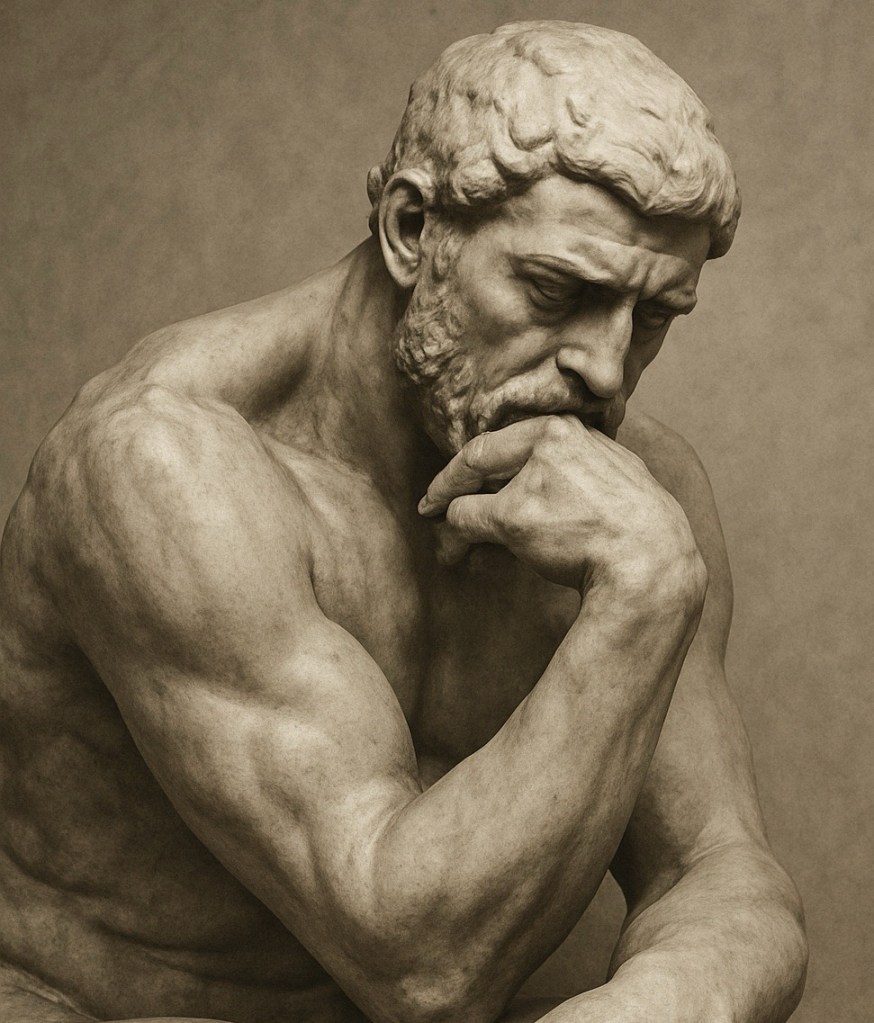
    Many men are waiting—waiting for God or the world to hand them purpose. They imagine that purpose will appear wrapped in the perfect job, a six-figure income, a loyal and beautiful wife, or the simple promise of happiness.

    But for most men, that day never comes. The truth is, many will go to their graves still waiting. Not because God didn’t call them, but because they never moved.

    It’s one of the hardest questions a man can ask himself: What is my purpose? But maybe that’s the wrong question. Perhaps the question isn’t “What’s my purpose?” but “What’s Gods purpose for me,” and “Why haven’t I started—or What am I waiting on?”

    Acknowledging this point is the first step in fulfilling your purpose. But to realize the full potential of what this question truly offers you, we need to ask who should or should not be in search of their purpose?

    Who is it for?

    Purpose is for all men but the search for purpose is for men who:

    Feel stuck, waiting for God or the world to hand them a sign.

    Sense a calling, but can’t find a way to move on it.

    Want to lead boldly but fear rejection or failure.

    Search for sparks of fleeting inspiration.

    Know they were made for more than passive observation.

    If you read that list and think to yourself, “That’s me,” you’re not alone. You’re the kind of man God designed to fulfill his glory.

    Before we discuss the challenges you will encounter while pursuing your purpose, let me explain why it’s the most important pursuit you will ever make but are more than likely to miss.

    What is purpose?

    Purpose begins from above. The search for meaning starts when a man looks beyond himself.1

    The New Oxford Dictionary defines Purpose as the reason something is done or created or for which something exists. The “something” in the definition is the object that is being used to create or to do. That “something” is you and that means you were made for a reason and that is to create and take action. This suggests that purpose is based on the rule of three.

    Rule one: Live life with intention

    Rule two: Have agency in my purpose

    Rule three: Find reason in both (intention and agency)

    The first two rules are easy to grasp because they’re self evident, but the last rule centered on “reason” is what trips most men up because they don’t know they have the capacity to be intentional and an agent of purpose. Reason is defined as a capacity to consciously draw valid conclusions with the aim of seeking truth. We have reason because HE is the reason. Every rule we form, every law we live by, flows through HIM. Our ability to reason is a reflection of our creator. Without HIM, our reasoning collapses into everything but purpose. Therefore, to do what God intends you to do, you must seek and find HIS PURPOSE for you.

    In 2002, Rick Warren wrote the now Christian cult classic: A Purpose Driven Life. He says purpose all starts with Jesus Christ. To find it means you must find HIM first. It’s in your relationship with the purpose maker where you will find what you have been quietly seeking your whole life. Rick makes this point simple to understand by quoting Colossians 1:16b, which states, “Everything got started in him and finds its purpose in him.”

    With purpose, you begin to see life through God’s lens and understand that you are here to live for HIM—for HIS glory, HIS pleasure, and HIS plans. It’s not easy to grasp because you are not at the center. But that’s the point. Purpose shifts the focus from self to source, and we have stories that bring this truth to light.

    Viktor Frankl was a Jewish psychiatrist from Vienna when the Nazis invaded in WW2. They took his home, his family, and his freedom. Inside the concentration camps, he watched men break under despair. Some gave up; others endured. The difference wasn’t strength, it was purpose.

    Eventually, he stopped asking what life could give him and started asking what life expected of him. That question carried him through the darkness most can’t fathom.

    He was later nominated for the Nobel Peace Prize but never won. Instead, he wrote Man’s Search for Meaning—a book born from the ashes of suffering—that went on to sell over ten million copies and inspire generations to find meaning beyond pain.

    His discovery speaks to a truth that echoes Scripture: “you, Lord, give perfect peace to those who keep their purpose firm and put their trust in you (Isaiah 23:16). Finding purpose gives peace in times of uncertainty and the search for it is worth living for because HE is at the center.

    Even though, finding HIM is the most important step in moving toward your purpose, this alone is not sufficient. While it does free you from all the chains that constrain you from your purpose, you must take action. Without taking action, you can’t carry out HIS purpose and therefore can’t fulfill yours.

    Purpose is all about action

    Purpose is forged in action

    When David slew Goliath, he didn’t think that was his purpose or the first step toward it. At least scripture doesn’t make that idea demonstrably clear. He wasn’t chasing purpose—he was defending HIS purpose. He simply knew that no one should defy or dishonor the name of his God. He took action when others were paralyzed by fear. Without slaying Goliath, he misses his rise toward kingship, never seduces Bathsheba and never fathers Solomon—who’s lineage leads to the birth of the Messiah.

    Action begins with conviction, a stirring of the Spirit or the conscience. It’s when something inside you says, “This isn’t right,” or “This must be done.” David felt conviction before Goliath. Nehemiah felt it when he saw the ruins of Jerusalem. Conviction is God’s whisper that demands movement.

    But understanding the importance of purposeful action is not enough, because taking action is often difficult to do. In fact, you must have at least three of five attributes, which I call the 5 Cs of Purposeful Action: Conviction, Clarity, Commitment, Correction, and Continuation. These five attributes spring board purpose. When it comes to purpose:

    1. Conviction starts it; 2. Clarity defines it; 3. Commitment sustains it; 4. Correction refines it and; 5. Continuation fulfills it.

    Without three of the five Cs, you will give up on your purpose. King Saul is a perfect example. He had everything a man could ask for: position, power, and the calling of God Himself. He started with conviction and clarity, chosen to lead Israel into victory. But conviction without commitment, and clarity without correction, is a slow collapse. Over time, he was moved more by fear than by God’s instructions and it was his lack of continuation toward his faith that marked the beginning of his fall. Don’t be Saul!

    Why most men fail to act

    Failing to act is a vicious cycle that stops you from fulfilling HIS purpose

    Approaching life with HIS purpose in mind requires motion, and motion requires courage. Yet most men today are immobile. They wait for perfect timing, perfect signs, perfect certainty. But purpose never begins with perfection; it begins with conviction.

    Men fail to take action because modern life conditions them to be observers, not initiators. We scroll, compare, analyze, and wait for permission that never comes. Social order teaches men to stay within their “circle,” to avoid risk, to pursue what feels safe and familiar. But growth, and Godly purpose, lives outside that circle. You cannot fulfill divine purpose while clinging to familiar comfort. Consider that almost all God’s prophets uprooted themselves from where they grew up. Home represents safety, identity, and what we already understand. Purpose demands leaving your comfort zone.

    The man who hesitates at the moment of opportunity lacks two of the three below:
    • Conviction—he doesn’t know what he truly stands for.
    • Clarity—he can’t see what the next right step is.
    • Commitment—he starts but doesn’t stay the course.
    • Correction—he refuses to learn from missteps.
    • Continuation—he gives up before the seed bears fruit.

    So he sits still, watching potential pass by, rationalizing his inaction as patience or prudence. But waiting becomes a habit, and habit becomes identity. Purpose takes a back seat while distractions steer the path.

    Purposeful Action is not natural—it’s spiritual. The moment a man acts, he breaks the gravity of fear. God honors movement because movement signals faith. Every step forward is a declaration that you trust the One who orders the path. As you walk in HIS path, HE directs your steps and guides you along the journey.

    I have seen it many times in my life even when I was lost. It usually happens when I get a deep desire to act in way that glorifies God. Sometimes it is simply to share his word or to love others in the way he requires. At other times, it’s a complete shift in mindset, thought patterns, or behaviors.

    I have not only seen it in myself, but also in others. For example, a friend of mine couldn’t understand how he was able to afford his beautiful home. He knew they couldn’t normally afford that particular home but they got an abnormal deal for a brand new home. It wasn’t until years later that he fully understood why. His home was not only where he taught his children about God, but it was the center of a much needed men’s ministry he had been working on in the background for over a decade. Miracles spring when you take action and walk on faith. Eventually, what seems impossible before becomes routine. It becomes routine because it confirms who HE is and what HE has for you.

    How to know if your purpose is God’s purpose

    Distinguishing your purpose from God’s purpose isn’t easy. Imagine having goals that feel righteous. They feel right because they reflect good intentions and even Godly deeds. Maybe you volunteer, coach a soccer team, or mentor kids on the weekends. You feel fulfilled. You tell yourself, this must be my purpose. You’re helping children, building community, and honoring God through service.

    But purpose isn’t always found in what feels good; it’s revealed in what God has called you to do. Sometimes what we call purpose is just altruism or preference wrapped in productivity. True purpose begins when obedience overrides comfort, when we stop asking what we want to do for God and start asking what God wants to do through us.

    One way to know if it’s truly your purpose is to recognize that it will require much of you. It won’t flatter your comfort; it will test your character. Purpose rarely comes dressed in ease—it comes dressed in endurance. It’s the hard road, not the easy one.

    Often, God’s purpose isn’t opportunity—it’s costly. Consider every prophet in Scripture. None of them chose the comfortable path.
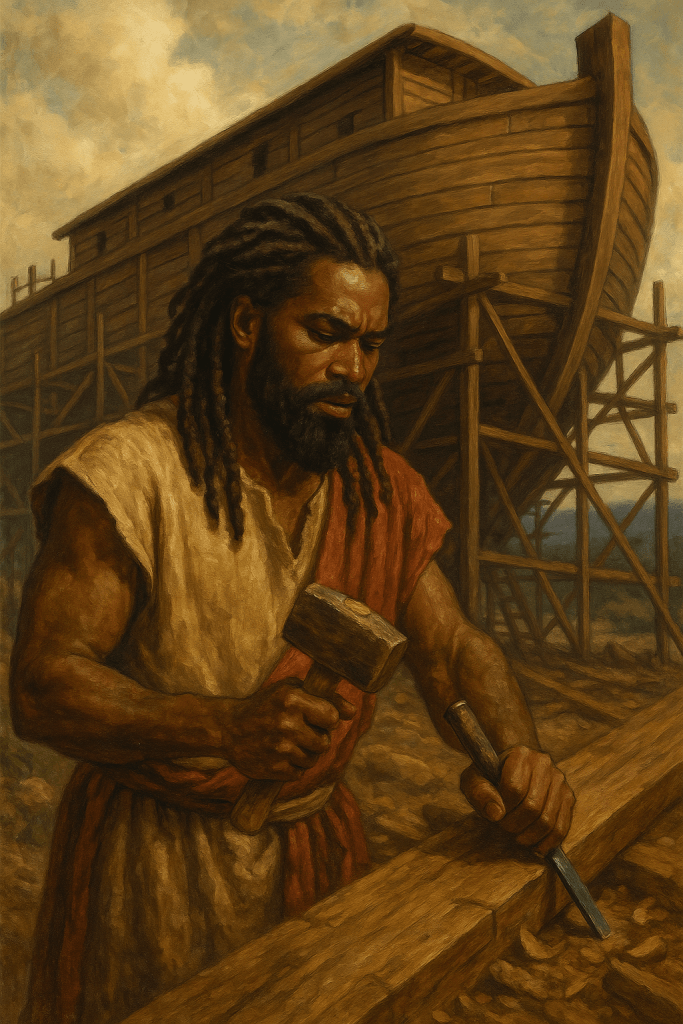
    • Noah built an ark for decades while the world mocked him.
    • Moses returned to Egypt, the place of his fear, to confront Pharaoh.
    • Jeremiah was thrown into a pit for speaking truth.
    • Jonah ran from God because he didn’t want to obey.
    • Even Jesus, the Son of God, prayed that the cup might pass from Him.

    God’s purpose will stretch your patience, test your faith, and often lead you where you’d rather not go. But that’s how you know it’s from Him. The path HE ordains will always cost you something you wouldn’t willingly give, your pride, your control, your comfort. Yet, on the other side of that cost is transformation.

    Conquering through purpose

    Victory is a central part of purpose

    Every man must face his Goliath. The fear, failure, or comfort that dares to stand between you and the purpose God called you to live. But victory doesn’t come from avoiding the fight; it comes from stepping into it.

    You were not created to drift, to wait for permission, or to watch life happen. You were made in the image of a Creator who moves mountains and parts seas. That same Spirit lives in you.

    Purpose is the daily choice to act when others hesitate, to trust when others doubt, and to rise when others retreat. Every time you take a faithful step, Heaven takes note.

    So walk boldly. And when the road feels steep, remember, it’s part of the process.